
Events may run smoothly. Getting there isn’t always straightforward.
On opening day, everything is expected to work. Guests arrive, doors open and the program starts on time. Any challenges during the build are already out of sight. Most people will never know what it took to get there.
When everything seems on track, things still shift
Event planning doesn’t move in a straight line. Even when timelines are locked and plans are approved, things change:
- Ground conditions aren’t what they seemed
- Site access turns out to be more limited
- Weather interferes at the worst possible moment
- Requirements shift while the deadline stays fixed
And unlike many other industries, there is no room to move the finish line. Opening time doesn’t change. Circumstances may shift right up to the final phase. The deadline doesn’t. That’s when it matters who you work with.
Three moments where the build could have gone off track
1. When the ground doesn’t cooperate — America’s Cup, Barcelona
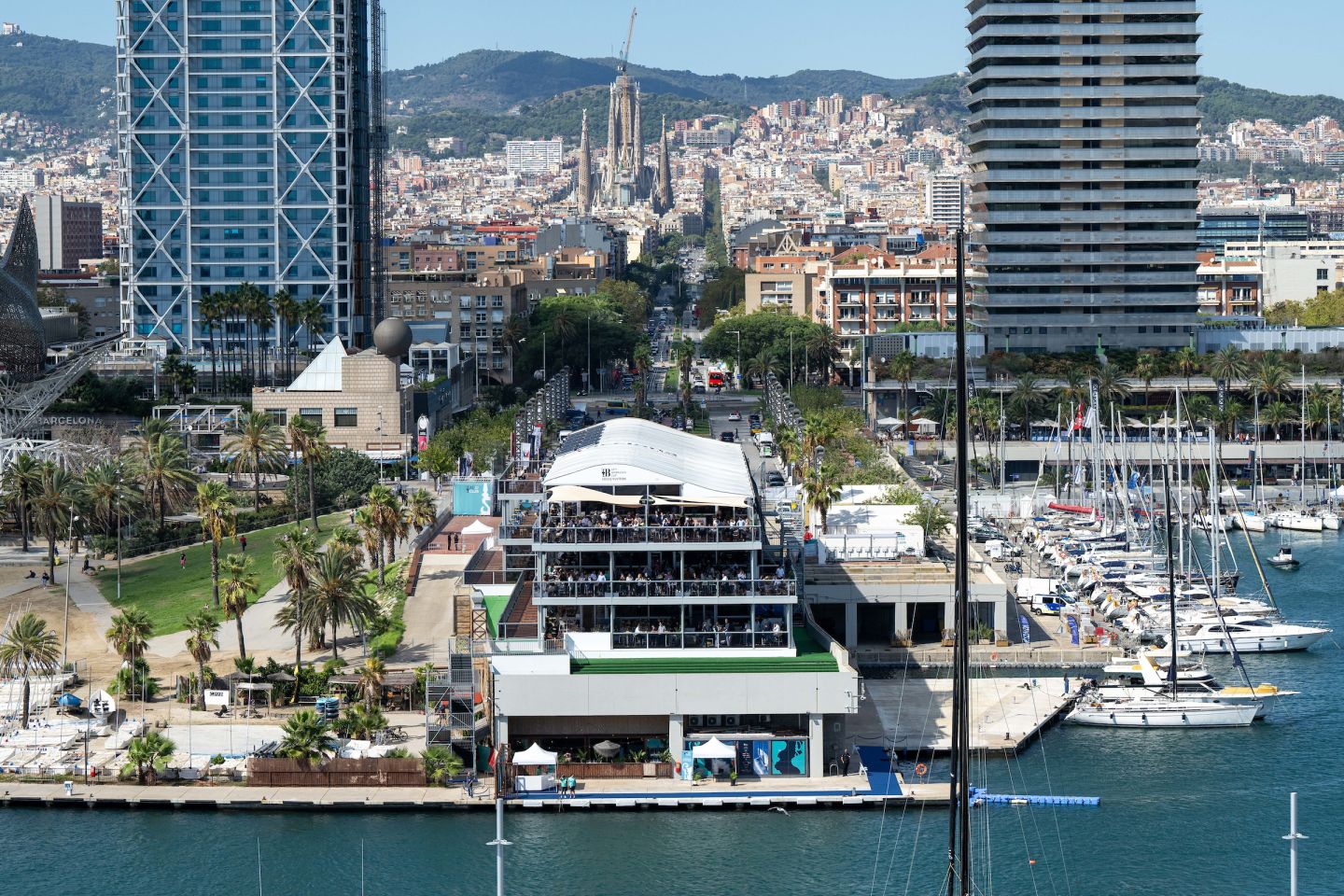
For the America’s Cup in Barcelona, a three-level hospitality venue with capacity for 1,000 guests was planned directly on the waterfront. From the outside, the location offered a spectacular setting. Beneath the structure, however, the site presented a very different engineering challenge.
Half of the venue stood on solid ground, while the other half was positioned above a parking garage with limited load capacity. This was more than a technical detail: without the right solution, it could have affected the feasibility of the entire build.
The structure therefore had to be re-engineered to distribute the load differently, while keeping the approved design, timeline and intended guest experience intact. The challenge underneath the venue was significant, but the outcome above it remained exactly as planned: a fully operational hospitality space, delivered on time and ready for opening day.
Full case study.
2. When the plan keeps changing — COP26, Glasgow
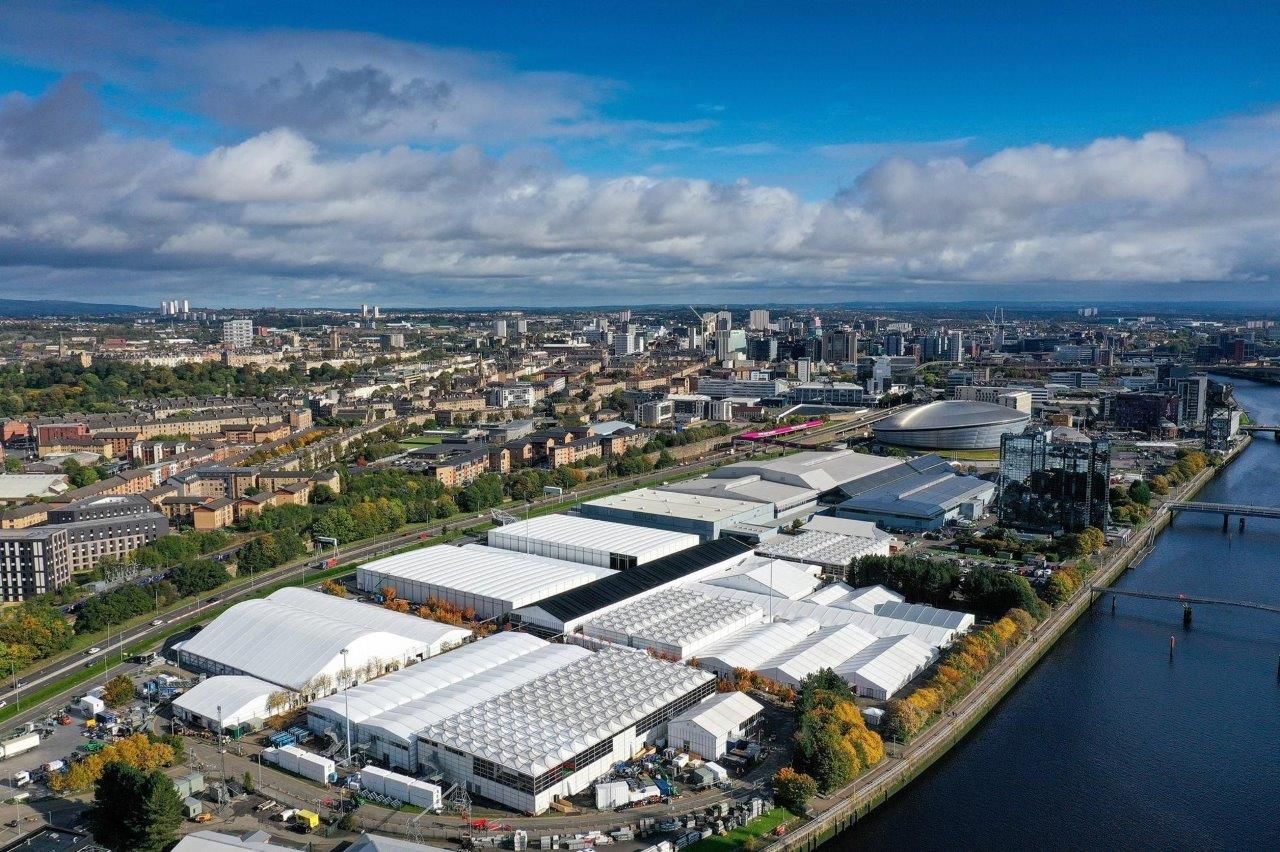
For COP26 in Glasgow, the opening date was fixed and the international visibility of the event left little room for error. Yet as delivery progressed, the requirements continued to evolve, including during the final stages of the project.
The challenge was not simply to accommodate those changes, but to do so without allowing them to slow down the overall delivery. Plans had to be adjusted in real time while work continued and the deadline remained unchanged.
Despite the constant movement behind the scenes, the result was what the organizer needed from the outset: a fully operational event environment, delivered as planned and ready when the event opened.
Full case study.
3. When conditions turn against you — IBC, Amsterdam
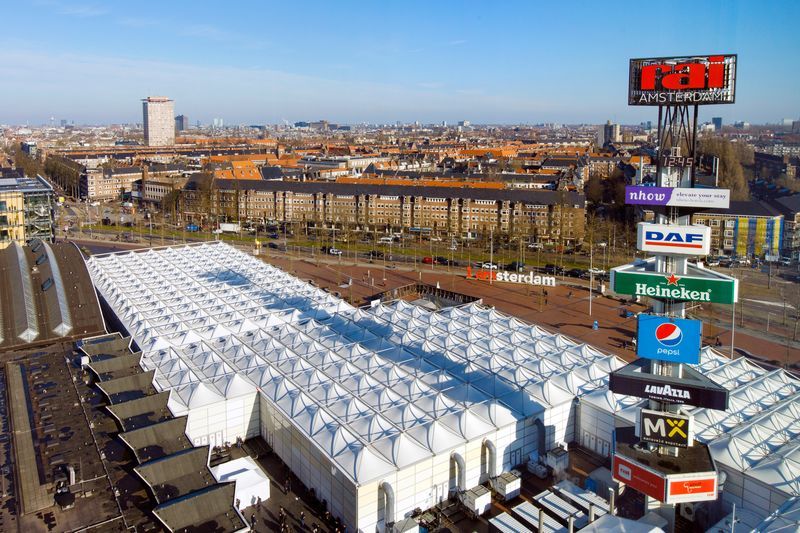
For IBC in Amsterdam, the project involved expanding the RAI, the Netherlands’ largest exhibition and convention center, with a temporary venue built on a busy public square and fully integrated with the existing halls.
At a critical stage of the build, just as the roof was due to be installed, heavy snowfall made the planned installation impossible. With no meaningful buffer in the schedule, simply waiting for better weather was not an option.
The team adapted to the conditions by keeping the structure clear of snow and preparing everything so installation could begin as soon as a suitable weather window appeared. Project managers, engineers and crew all helped keep the structure clear and ready. When a short window finally opened, the 100-meter roof was lifted into place that same day.
For visitors and exhibitors, none of that complexity was visible. The venue was completed and the event opened on time, without disruption.
Full project interview.
What this actually means for event organisers
These situations are not exceptions. They are part of the reality of large-scale events. The difference is not whether challenges occur, it’s whether they become visible.
For event organizers, success is not measured by how complex a project was. It’s measured by:
- whether timelines are met
- whether budgets stay under control
- whether the event runs without disruption
- whether clients notice anything at all
In other words: whether it simply works.
The part no one sees
What makes this possible isn’t the structure itself. It’s the ability to manage uncertainty without passing it on to the organizer: adapting when conditions change, making decisions quickly and solving problems before they affect the event.
When opening time is fixed, that experience creates something far more valuable than a temporary venue. It gives organizers the confidence to focus on the event itself, knowing that the space around it will be ready when it matters.
Planning an event where timing leaves little room for error?
Talk to our team about the space, site and delivery requirements for your event.


