Expand your warehouse capacity without a lengthy construction project
Create additional warehouse space within weeks for inventory peaks, business growth or temporary logistics requirements. Available to rent or buy and configured around your site and operations.
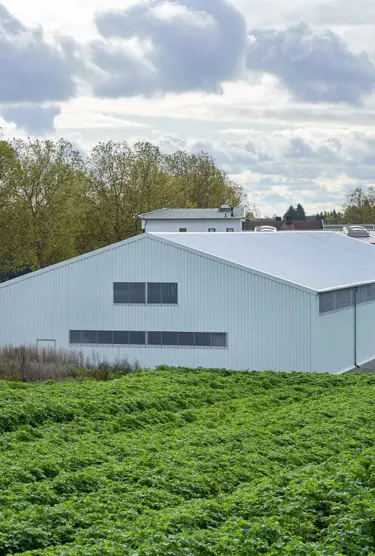
- Additional warehouse capacity within weeks
- Flexible and scalable as your needs change
- Available to rent or buy
Additional capacity when your operation demands it
Inventory peaks, production growth or a new contract can quickly put pressure on existing warehouse capacity. Temporary warehouse space gives you the additional capacity you need to keep receiving, storage and distribution running efficiently.
Our modular warehouse buildings are configured around your available space, required timeframe and logistics processes. This allows you to expand capacity without waiting for a lengthy conventional construction project.
Typical applications include:
- Seasonal peaks, Black Friday and other promotional periods
- Inventory or production growth
- New contracts and logistics projects
- Temporary storage during renovation or expansion
- Additional distribution or fulfilment capacity
Need additional capacity for an upcoming peak period? Talk to us about what is possible at your site.
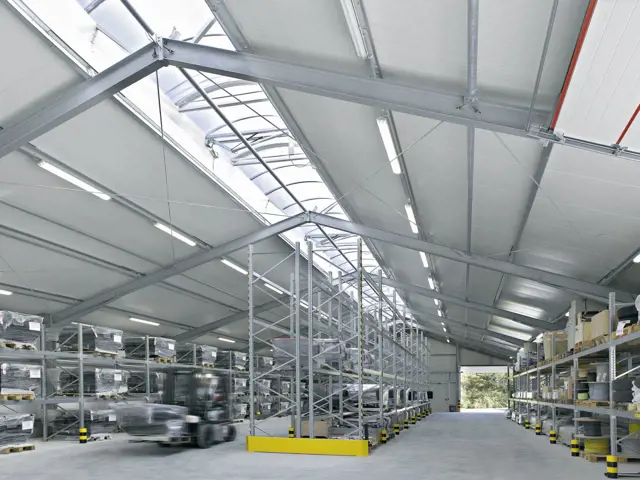
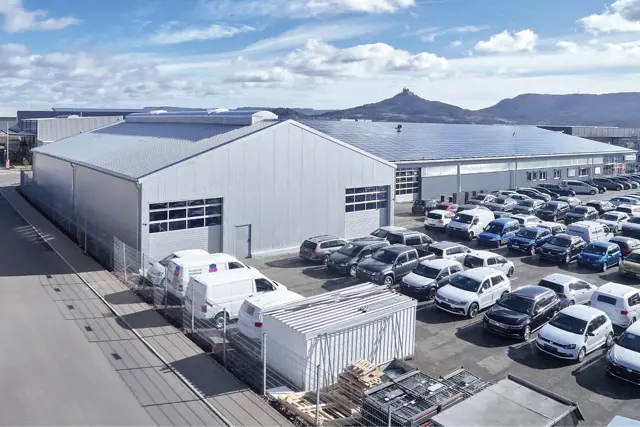
Why choose modular warehouse space?
Rapidly operational
When additional storage capacity is needed, a lengthy construction programme is often not an option. Depending on the size, site and required preparation, our warehouse buildings can be operational within weeks.
Flexible and scalable
The capacity you need today may not be what you need next year. Modular construction allows your warehouse space to be expanded, adapted, reduced or relocated as your operation changes.
Designed around your logistics processes
A warehouse needs to do more than add square metres. Traffic flows, racking, forklift movements, doors, loading facilities and connections to existing buildings can all be considered from the outset. The result is additional space that works with the way your operation actually runs.
Which temporary storage environment does your operation need?
Not every type of inventory requires the same storage environment. We configure the building around what you store and how the space will be used day to day.
Weather-protected storage
For bulk goods, machinery and materials that need to remain dry and protected from the elements.
Suitable for: raw materials, steel and timber, palletised goods and equipment.
Dry and condensation-controlled storage
For goods and processes that require additional protection against moisture and condensation.
Suitable for: packaging materials, dry goods, fulfilment, sorting operations and covered loading areas.
Insulated or climate-controlled storage
For inventory where insulation, temperature management or a stable internal environment is important.
Suitable for: temperature-sensitive goods, food logistics, electronics and other storage processes with specific climate requirements.
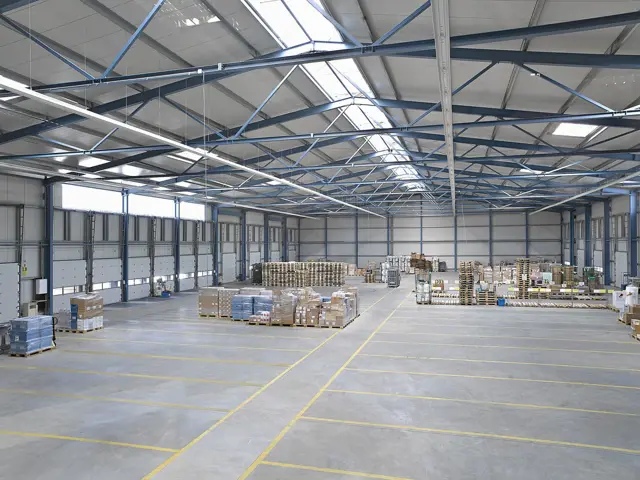
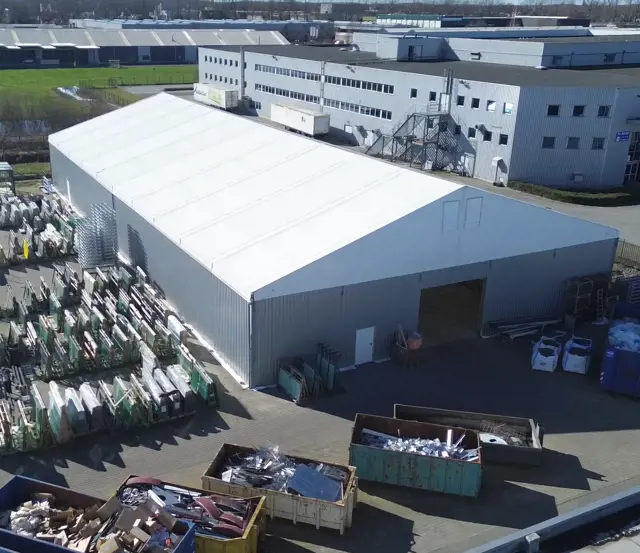
From capacity requirement to operational warehouse
Additional warehouse space needs to work with both your site and your daily operations. That is why we first establish what the space needs to enable before determining the technical solution.
- Requirements and site
We discuss how much capacity you need, how the space will be used, how long it is required and when it needs to be operational. - Design and planning
We determine the configuration and positioning of the building around your site, accessibility and logistics processes. - Engineering and preparation
The technical solution is developed and the necessary site preparations are coordinated. - Installation and handover
Our teams install the building and agreed facilities, leaving the additional space ready for use.
Rent or buy?
The right choice depends on how long you need the additional capacity, how much flexibility you want to retain and how you prefer to structure the investment.
Rent
Suitable for seasonal peaks, temporary projects, renovations and other situations where you want the flexibility to reduce capacity once the requirement ends.
Buy
An attractive option when additional warehouse capacity is required for the longer term or becomes part of a structural expansion.
Not sure which option is right for your operation? We can compare both based on your capacity requirements and expected period of use.
Explore the possibilities for your warehouse
Want to explore the options first? Configure a warehouse building in 3D or view our brochure to learn more about the available solutions.

Ulrich Karsch Managing Director Car Centre Karsch GmbH
Proven in practice
Additional warehouse capacity needs to do more than become available quickly. It also needs to fit the available site and work effectively within the existing operation.
“We urgently needed another storage hall to meet the increased demand. Losberger De Boer's solution convinced us directly, as the industrial hall not only ensures flexibility but also rapid assembly. First-class consultancy and realisation.”
We love to show you some of our finished warehouses


How much additional space do you need?
Tell us how much capacity you need, what the space will be used for and when it needs to be operational. Our specialist can help you determine what is possible at your site and which solution best fits your timeframe and logistics processes.
FAQ on Warehousing & Storage solutions
Find answers to common questions about temporary warehouse space, from installation times and site requirements to rental, expansion and climate control. Can't find the answer you need? Contact our team.
Installation time
How quickly can additional warehouse space be operational?
Depending on the size, site, required facilities and any necessary permits, a modular warehouse building can often be delivered within weeks. During the initial project discussion, we establish what is required and determine a realistic timeframe for your situation.
Site
Can a warehouse building be installed on my existing site?
In many cases, yes. We assess factors including available space, ground conditions, accessibility and connections to your existing logistics processes to determine how the additional capacity can best be integrated into your site.
Rent or buy
Can I rent or buy a warehouse building?
Yes. The right option depends on factors including the required period of use, your investment strategy and the flexibility you need. Renting can be attractive for temporary peaks or projects, while purchasing may be more suitable for long-term capacity expansion.
Scalability
Can the warehouse building be expanded or adapted later?
Yes. The modular design allows capacity to be adapted as your requirements change. Depending on the chosen solution, a building can be expanded, reduced, modified or relocated.
Insulation & climate
What insulation and climate-control options are available?
The specification is determined by what you need to store and the conditions required. Options range from straightforward weather protection to insulated and climate-controlled warehouse space.
Building connections
Can the new warehouse space connect to an existing building?
In many cases, yes. The positioning of the building, access points, loading facilities and weather-protected connections to existing buildings can all be incorporated into the engineering process.
Permits
What permits are required for a temporary warehouse building?
Requirements depend on factors including location, period of use and building specification. We therefore identify relevant local requirements and permitting considerations early in the project.


